
Most homeowners don’t think about their phone and data wiring until something goes wrong. The Wi-Fi drops during an important video call, the internet crawls to a halt during peak hours, or a new smart device simply won’t connect the way it should. These frustrations are common, but they’re often not the router’s fault. The real culprit is frequently the wiring running behind your walls. At NTX Electric, we’ve helped hundreds of homeowners get to the root of their connectivity problems by addressing what’s hidden where most people never look. According to a 2023 report by the American Housing Survey, nearly 40% of homes in the United States were built before modern high-speed internet infrastructure was even a concept. That means millions of households are relying on decades-old wiring to support streaming services, remote work setups, smart home devices, and video conferencing platforms that simply didn’t exist when those walls were first built. Understanding what your home’s data electrical wiring can and can’t do is the first step toward fixing the problem for good.
What Is Phone and Data Wiring, and Why Does It Matter?
Phone and data wiring refers to the structured cabling system inside your home that carries voice and internet signals from an entry point, typically where your service provider connects to the house, to the individual outlets, routers, and devices throughout your living spaces. This includes telephone lines, coaxial cables used for cable internet, and Ethernet cables such as Cat5e, Cat6, or Cat6a that support high-speed data transmission.
The type and condition of the cabling in your home directly affects the speed, stability, and reliability of every connected device. Older phone lines made from aluminum or thin copper wiring were designed for analog voice calls, not gigabit internet speeds. Running modern internet signals through outdated infrastructure is a bit like trying to pipe high-pressure water through a garden hose. The capacity simply isn’t there.
The Difference Between Ethernet and Wi-Fi
Wireless internet has made remarkable strides over the past decade, but it still has real limitations. Wi-Fi signals degrade as they travel through walls, floors, and large appliances. They’re also subject to interference from neighboring networks, microwaves, and other wireless devices. A wired Ethernet connection, by contrast, delivers consistent speeds and significantly lower latency. For households with gamers, remote workers, or anyone who streams in 4K, a hardwired connection isn’t a luxury. It’s a practical necessity.
Common Phone and Data Wiring Problems in Older Homes
Homes that haven’t had their wiring updated in the last 10 to 15 years often share a handful of recurring issues. Corroded or damaged connectors can introduce signal loss that’s barely noticeable at lower speeds but becomes a real problem at higher bandwidth demands. Improperly terminated cable ends, which are cable connections that weren’t crimped or installed with precision, can cause data packets to drop inconsistently, making it nearly impossible to diagnose the problem without a professional inspection.
In some cases, telephone wiring that was installed in the 1990s or early 2000s was spliced and extended by various contractors over the years, creating a tangled web of connections that simply can’t support modern use. Each splice or poorly made junction adds resistance and reduces signal quality across the entire line.
How Age and Installation Quality Affect Performance
A home built in the 1980s might have wiring that was considered state-of-the-art at the time. Today, that same wiring may be limiting your internet to a fraction of the speed you’re paying your provider for. Even newer homes can have performance issues if the wiring was installed quickly during construction without attention to proper routing, shielding, or termination standards. The quality of the installation matters just as much as the age of the materials.
Upgrading Your Home’s Data Wiring: What the Process Looks Like
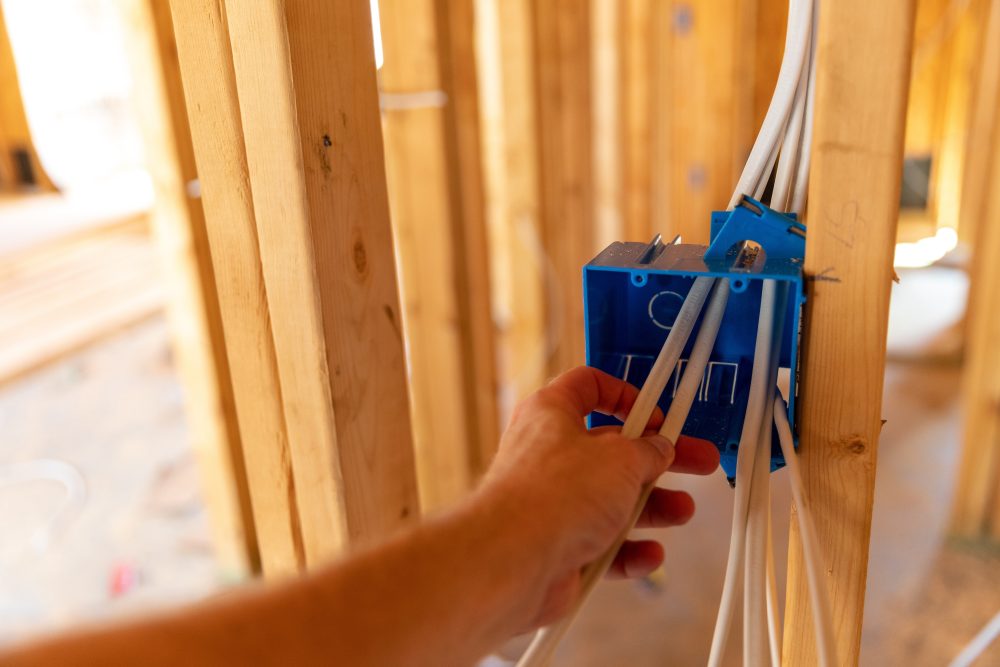
A professional data wiring upgrade typically begins with a thorough assessment of your current infrastructure. A licensed electrician will trace your existing cabling, identify problem areas, and map out the most efficient path for new runs. From there, new Cat6 or Cat6a Ethernet cable is routed through walls and crawl spaces to the locations where you need reliable connectivity most, whether that’s a home office, a media room, or a central network closet.
The result is a clean, organized wiring system that can support speeds of up to 10 gigabits per second depending on your service plan and equipment. That means no more dead zones, no more buffering, and no more dropped calls on your home phone line.
Investing in Connectivity Is Investing in Your Home
Reliable phone and data wiring isn’t just a technical upgrade. It’s a quality-of-life improvement that touches nearly every part of your daily routine. Whether you’re working from home, helping kids with online schoolwork, or simply trying to stream a movie without interruption, the right wiring infrastructure makes all the difference.
NTX Electric brings licensed expertise and a commitment to clean, code-compliant work to every project we take on. If your home’s connectivity has been letting you down, the solution might be simpler and more lasting than you think. Reach out to our team today for a professional assessment and take the first step toward a fully connected home.