
Why Are Proper Grounding and Bonding Important for Homes and Businesses in DFW?
Proper grounding and bonding are important because they help protect people and property when an electrical fault occurs. Grounding connects an electrical system to the earth, while bonding connects conductive components together to create an effective fault-current path. When properly installed, these connections help protective devices operate as intended and reduce electrical shock and fire hazards.
NTX Electric helps homeowners and businesses throughout the Dallas-Fort Worth area maintain safer, more dependable electrical systems. As a family-owned and operated company led by a Master Electrician, NTX Electric brings more than 20 years of industry experience to residential, commercial, and industrial electrical projects. From electrical safety inspections and code corrections to meter bases, panels, grounding, and bonding, our licensed electricians focus on professional workmanship and practical solutions tailored to each property. Whether you own an older Dallas-area home or manage a growing North Texas business, having electrical connections evaluated by an experienced electrician can help identify problems before they become more serious.
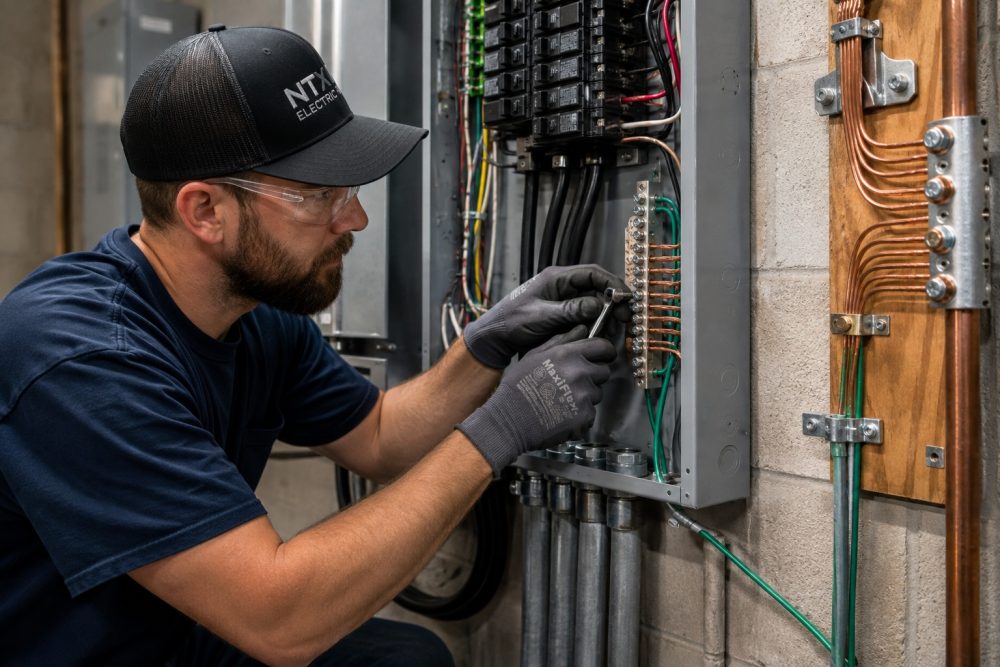
How Proper Electrical Grounding and Bonding Improve Safety
Grounding and bonding work together, but they perform different jobs. According to definitions used by the National Fire Protection Association (NFPA), grounding involves connecting equipment or a system to the earth, while bonding establishes electrical continuity and conductivity between conductive components.
The distinction matters because the earth itself is not intended to serve as the only path for fault current. An effective equipment grounding and bonding system provides a low-impedance path that allows fault current to return toward its source so a breaker or other protective device can respond appropriately.
For homeowners and businesses, that means grounding and bonding can play a critical role in reducing the risk associated with damaged wiring, insulation failures, loose electrical connections, and other faults.
What Is the Difference Between Grounding and Bonding?
Grounding connects the electrical system to the earth, while bonding electrically connects conductive parts to one another. Both are necessary parts of a properly designed electrical system.
Grounding can involve grounding electrodes and grounding electrode conductors that establish a connection between the electrical system and earth. Bonding connects conductive components such as electrical enclosures and other metal parts that are required to remain electrically continuous.
A simple way to think about the difference is:
- Grounding: Establishes the system’s connection to ground.
- Bonding: Connects conductive components so they remain at substantially the same electrical potential and provide an effective fault-current path.
- Equipment grounding: Helps carry fault current back toward its source so protective equipment can operate.
These systems must be installed correctly. A ground rod alone, for example, is not a substitute for the effective equipment grounding and bonding path needed to clear an electrical fault.
Why Does Proper Bonding Matter During an Electrical Fault?
Proper bonding helps provide a reliable path for fault current, allowing breakers and other overcurrent protection to respond when conductive equipment accidentally becomes energized.
Imagine that insulation on an energized conductor fails and the conductor contacts a metal electrical enclosure. Without an effective fault-current path, the metal enclosure could remain energized and present a shock hazard.
Proper bonding connects conductive components into the electrical safety system. When a fault occurs, this path helps sufficient current flow back toward the source so the appropriate protective device can trip.
Problems can develop when connections are:
- Loose or corroded
- Improperly sized
- Missing altogether
- Altered during renovations
- Incorrectly connected at a panel or subpanel
- Damaged during equipment replacement
Because many grounding and bonding components are inside panels, enclosures, or other electrical equipment, problems may not be obvious to a property owner.
What Grounding and Bonding Problems Are Common in DFW Properties?
Older electrical systems, remodeling work, equipment changes, and improper previous repairs can all contribute to grounding and bonding deficiencies in DFW homes and commercial properties.
North Texas includes everything from older neighborhoods in Dallas and Fort Worth to rapidly developing communities across Collin, Denton, and Tarrant counties. Electrical systems can vary considerably based on a property’s age, previous renovations, and equipment that has been added over time.
An older building may have electrical components installed under previous code requirements, while a remodeled property may contain a combination of old and new wiring methods. New equipment such as generators, EV chargers, replacement panels, and other electrical upgrades can also introduce additional grounding and bonding considerations.
Texas currently uses the 2023 National Electrical Code as the statewide electrical standard for work covered by the Texas Electrical Safety and Licensing Act. According to the Texas Department of Licensing and Regulation (TDLR), the 2023 NEC became effective September 1, 2023. Municipalities can also have local requirements or amendments, making professional knowledge particularly valuable for electrical work throughout the DFW Metroplex.
How Can You Tell If Grounding or Bonding Needs Attention?
Grounding and bonding problems cannot always be identified from everyday symptoms, so a professional electrical inspection is the most reliable way to evaluate these connections.
Certain electrical problems should still prompt you to have your system inspected. These can include:
- Frequently tripping breakers
- Shocks or tingling sensations from metal equipment
- Visible corrosion around electrical components
- Improperly installed or damaged grounding conductors
- Electrical problems following remodeling or DIY work
- Concerns about an older electrical panel or service
- Recent installation of a generator or other major electrical equipment
Do not attempt to diagnose grounding or bonding problems by opening an electrical panel or modifying grounding conductors yourself. Electrical panels can contain energized components even when individual branch-circuit breakers are switched off.
A licensed electrician can inspect the service equipment, grounding electrode system, equipment grounding paths, bonding connections, panels, and other applicable components to determine whether corrections are necessary.
Why Is Grounding and Bonding Especially Important During Electrical Upgrades?
Any major electrical upgrade can affect how grounding and bonding must be configured, so these systems should be evaluated whenever significant equipment is installed or replaced.
Panel replacements, service upgrades, generators, detached structures, and other electrical projects can change how parts of a property’s electrical system interact. Grounding and bonding requirements also differ depending on where equipment is located within the system.
For example, the way grounded and grounding conductors are handled at service equipment is not necessarily the same as their configuration downstream. Incorrectly connecting components where they should remain separated can create unwanted current on metal parts.
This is one reason electrical upgrades should be performed by qualified professionals rather than treated as simple component replacements. Proper installation involves looking at the electrical system as a whole.
For DFW property owners, there is another important consideration: local permitting and inspection requirements can vary by municipality. TDLR directs electricians to comply with the applicable NEC as well as requirements established by local licensing or inspecting authorities.
Grounding and Bonding FAQ
Is grounding the same thing as bonding?
No. Grounding establishes a connection to earth, while bonding connects conductive components together to maintain electrical continuity and provide an effective fault-current path. The two functions work together as part of electrical safety.
Can improper grounding cause an electrical shock?
Yes. Improper grounding or bonding can contribute to shock hazards if conductive equipment becomes energized and there is not an effective path for fault current. Electrical problems involving shocks or tingling sensations should be evaluated promptly by a licensed electrician.
Does every electrical panel need the neutral and ground bonded together?
No. Neutral-to-ground bonding is location-specific and depends on the electrical system configuration. Improper bonding downstream of the appropriate connection point can place unwanted current on grounding paths and conductive components, which is why panel wiring should be evaluated by a qualified electrician.
Should grounding and bonding be checked in an older DFW home?
Yes, especially if the property has undergone renovations, panel changes, additions, or previous electrical repairs. An inspection can identify missing, damaged, corroded, or improperly configured connections and determine whether corrections are recommended.
Protect Your DFW Property With Proper Electrical Connections
Grounding and bonding may be largely out of sight, but they are fundamental parts of a safe electrical system. Correct connections help create an effective path for fault current and allow electrical protective devices to perform their intended jobs.
For homes and businesses throughout DFW, NTX Electric provides professional grounding and bonding services along with electrical inspections, troubleshooting, code corrections, panel work, and other electrical solutions. With more than 20 years of industry experience, our team understands the importance of getting the details right.
Concerned about your property’s grounding and bonding? Contact NTX Electric to schedule professional electrical service in DFW.